

Seattle, Washington, is known as the Emerald City due to its abundance of evergreen trees and green foliage. When you arrive, you cannot miss the snowcapped wonder that is Mount Rainier, an active volcano that often pokes above the skyline and the treetops. The natural beauty of the city was once prominently juxtaposed by wheatpasted or posted posters promoting bands like Mudhoney and the Monomen, typically featuring loud, imperfect, and chaotic motifs representative of the city’s music scene.
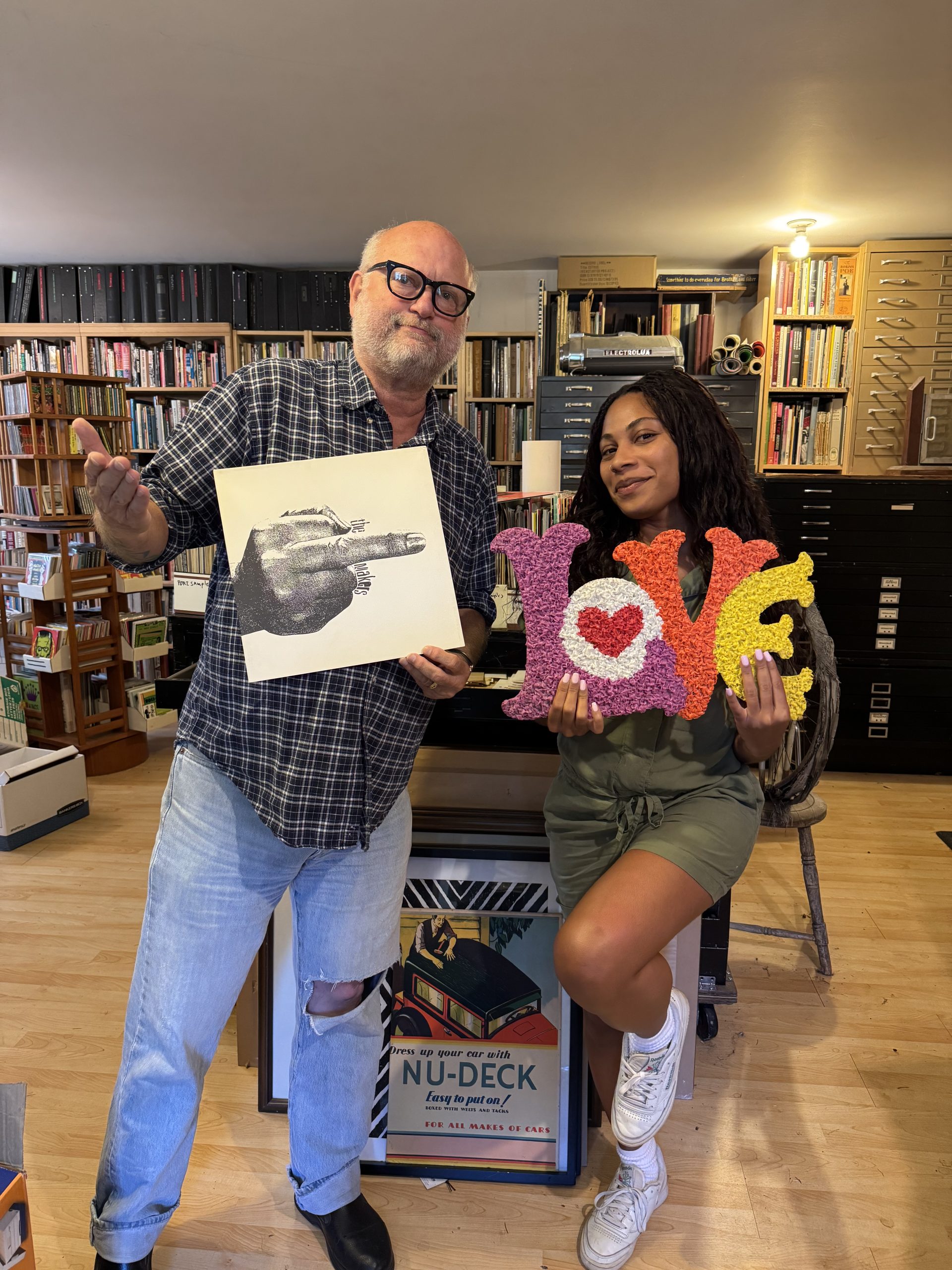
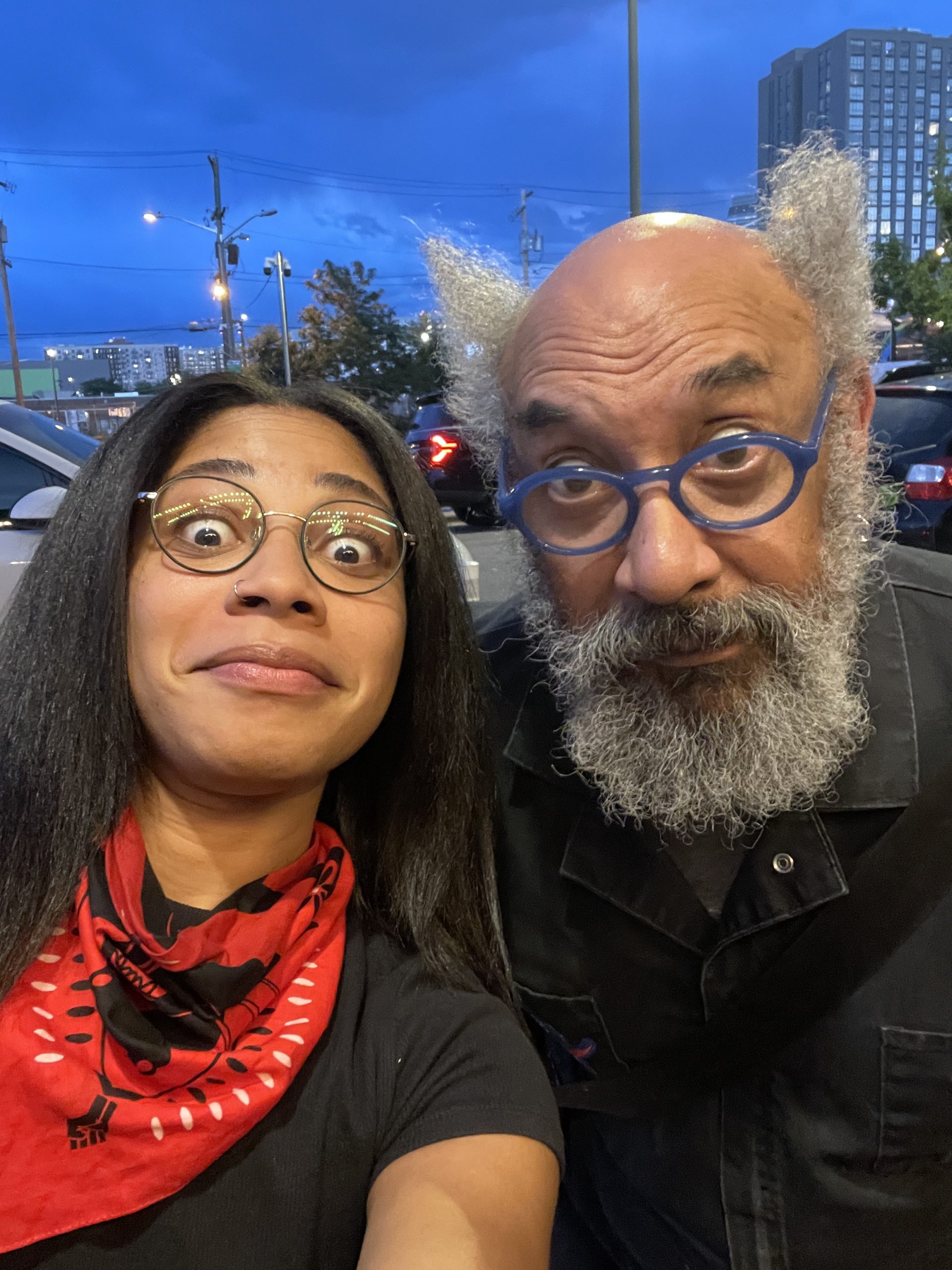
In August, I had the pleasure of traveling to Seattle and then driving an hour out to Tacoma to visit designer and rebel, Art Chantry. Poster House has a wonderful and robust collection of Art’s work from the late 20th century. After skimming through stacks upon stacks of these posters at the museum, I was overwhelmed by ideas that would guide me in a creative curatorial direction. However, I knew that a visit with the designer himself would fill in the gaps in my understanding of his unique design process, Seattle’s grunge/punk rock scene, and the city’s crackdown in the 1990s on the display of posters that would suppress every part of advertising from production to pasting.
Sin (1995) by Art Chantry
Poster House Permanent Collection
In musical terms, Seattle is perhaps best known as the location where the legendary band Nirvana recorded its first single and as the birthplace of grunge, an alternative rock genre, in the 1980s and 1990s. Its angsty lyrics, raw sound, and loud instrumentals reflected the remoteness of Seattle (and the state of Washington), a place detached from the polished and corporate record industry of the time. To complement the city’s unconventional subculture and music style, poster designers similarly experimented in their promotions for concerts, venues, artists, and bands. Art Chantry was perfectly situated as a designer during these years as he had already established his own experimental, affordable, and fast style. Though “the Seattle Sound” is important for historical context here, in our conversations Art wanted to be very clear that “grunge was a marketing term, not a cultural movement,” a point worth considering, especially as many artists at the time did not particularly like the term either. After all, it was just local punk rock, and many bands (regardless of the state or city) were making and playing this kind of music.
I arrived at Art and his partner’s beautiful property with an on-site studio in the morning. On the surface, it appeared that there were more books than posters but that’s largely because Art has done so much work that he’s tucked some of it away. This is not an exaggeration. At one point, he uncovered a catalogue that he’d codesigned for an Urban Outfitters’ Fall Savings Special from the 1990s. It is designed like a mechanical construction manual but advertises $36 flannel shirts and $14 blue wooden treasure chests. Though it was not technically a poster, the catalogue could be unfolded to reveal a fun layout of clip art, vintage photography, and type that might have been seen as a nice visual addition to a bedroom wall at some point in time. The placement of text and image mimicked some of the most captivating pieces in the Poster House collection. Most especially, it was just a really cool and clever design! (This was something that often crossed my mind when I initially sifted through our collection of Art Chantry’s posters). Art’s ability to create visually, texturally, and topically interesting printed works is his greatest gift and these are the elements of his work that will really distinguish the Poster House exhibition.
Art Chantry’s box of clip art.
Art called himself a “garbage man,” something I chuckled at until we made our way to the opposite side of his studio. When he was younger, he would find materials in junk yards or junk heaps for his projects and artwork. This process continued into adulthood when he would get economical and crafty in his search for materials for posters. He pulled out boxes of clip art that he’d been collecting for decades, unsure of when they would be used but sure that there would be a moment when he needed inspiration or one final touch to complete a project—and the clip art might come in handy. One example of this was a book of black cats with a diversity of expressions and in different positions. I spotted a cat that looked familiar; it turned out to be one that eventually ended up on the Midnight Evils poster that we are fortunate to have in the collection.
Midnight Evils(2003) by Art Chantry
Poster House Permanent Collection
A mechanical is what some graphic designers call their model or early draft (also called a maquette in the fine art world). Art Chantry has mechanicals that are so technical they remind the contemporary viewer that before the dominance of computer technology and programs like InDesign and Photoshop, designers manually layered, lettered, and illustrated with materials found at local art stores. Seeing the mechanical for posters like Sin and The Young and the Restless made me feel like I had gone to a flea market and uncovered a rare gem. These layered and complicated mechanicals are also incredibly helpful in understanding how designers develop their ideas for what will eventually be a flat poster. Needless to say, they are also incredibly valuable for researchers and those in the graphic design market.
The Young and the Restless by Art Chantry
Poster House Permanent Collection
Art Chantry’s posters are surprising, daring, exciting, and captivating—and while speaking to him I realized that many had been simply fun for him to create. He knows how to thoughtfully manipulate a poster and doesn’t confine his work to just printing on paper. The range and variety of his craft will be quite the treat for Poster House visitors, offering a unique perspective on what a designer is willing to do to get viewers excited.
Stay tuned for our 2027 exhibition on the posters of Art Chantry!